
Cybersecurity & Cloud Systems
Cloud-Based ATMS Security Compliance: A Digital Infrastructure Imperative
As roadway infrastructure adopts and deploys more connected and cloud-based systems, ensuring cybersecurity compliance with industry standards is a critically mounting requirement. Security standards such as Systems and Organization Controls (SOC), Government Risk and Authorization Management Program (GovRAMP), Federal Risk and Authorization Management Program (FedRAMP), and Europe’s General Data Protection Regulation (GDPR) establish rigorous frameworks for protecting sensitive data, ensuring system integrity, and maintaining user privacy. These frameworks also provide meticulous audit benchmarks for organizational processes and policies that some are required to be renewed at specific intervals. Compliance with these frameworks will be particularly crucial for cloud-based Advanced Transportation Management Systems (ATMS) that manage and leverage roadway data.
Compliance mitigates risk and ensures operational resilience. It also builds trust with public agencies and infrastructure stakeholders. Adherence to these standards supports regulatory alignment, enhances procurement eligibility, and enables scalable innovation. Moving forward, achieving compliance with rigorous independent cybersecurity frameworks will be imperative for the future of digital transportation infrastructure.

Comprehensive Cybersecurity Frameworks
Independent or third-party certified cybersecurity audits work to ensure comprehensive data security and privacy compliance. While different audits address different aspects of an organization’s responsibilities, generally, they follow industry recognized and certified processes. For example:
System and Organization Controls (SOC) Cybersecurity Audit
The SOC audit is governed by the American Institute of Certified Public Accountants (AICPA). The AICPA developed the System and Organization Controls frameworks, which includes SOC 2 Type II and SOC 3, and sets the standards for these audits to validate an organization’s cybersecurity posture and demonstrate the effectiveness of their internal controls. The AICPA also established the Trust Services Criteria (TSC): Focusing on the trust principles of Data Security, Availability, Processing Integrity, Confidentiality, and Privacy. It is a voluntary audit that provides third-party assurances about a platform and the Cloud Service Provider’s (CSP) internal controls over a period of time. Requiring ongoing compliance validation, it also verifies the operational effectiveness of operational controls.
Risk and Authorization Management Programs (RAMP)
GovRAMP and FedRAMP are closely related cloud security frameworks. FedRAMP, funded by the Federal Office of Management and Budget, is a U.S. government-wide program that standardizes the security assessment, authorization, and continuous monitoring of cloud-based products and services used by U.S. government agencies. It was created to accelerate the adoption of cloud-based computing by providing a government-wide security baseline. GovRAMP (formerly StateRAMP), a non-profit, is modeled after FedRAMP. GovRAMP is specifically designed for State, Local, Tribal, and Educational (SLED) entities to standardize the security evaluation of CSPs. This program serves the unique needs of state and local procurement processes, ensuring CSPs meet stringent security benchmarks. Both require continuous monitoring and assessment.
General Data Protection Regulation (GDPR)
GDPR is a mandatory, legally enforceable regulation framework that governs the processing of personal data of European Union (EU) residents. A GDPR audit assesses a company’s lawful compliance with data protection principles, including processing, subject rights, and security measures. In the case of GDPR, non-compliance carries significant penalties.
Compliance to Industry Security Standards for Cloud-Based ATMS Software: It Matters
Municipalities are deploying and implementing more cloud-based solutions to manage traffic safety, roadway infrastructure, and emerging mobility applications. As a result, cybersecurity compliance with industry security standards is essential. Auditing and evaluation frameworks like SOC 2 Type II, GovRAMP, and GDPR provide structured, third-party validation of security, privacy, and operational controls.
This helps ensure that not only the platform is resilient, trustworthy, and aligned with regulatory expectations, but also that the organization adheres to the highest standards for security processes and policies. This is especially important for CSPs and a cloud-based ATMS platform.
Data Security & Trust
Cloud-based ATMS platforms handle growing volumes of roadway data, including traffic patterns, infrastructure telemetry, and user information. SOC 2 Type II audits validate not only the existence of security controls but also their operational effectiveness over time. This instills long-term confidence in the platform’s ability to protect data against breaches and unauthorized access.
GDPR further reinforces this by mandating strict data handling, consent, and breach notification protocols for any system processing personal data. GovRAMP, tailored for U.S. Federal systems, ensures that cloud services meet stringent security baselines. In many cases, this is mandatory for public-sector technology procurement and deployments. Together, these frameworks assure stakeholders and users that data confidentiality, integrity, and availability are prioritized.
Operational Excellence & Risk Management
Compliance frameworks mandate best practices that directly enhance ATMS resilience. SOC 2 requires robust access controls, encrypted communications, and continuous monitoring. It verifies that only authorized users can interact with critical systems. The process audits enforce vulnerability scanning, incident response planning, and configuration management, which are vital for maintaining uptime and mitigating threats.
Further, ATMS platforms will require verification of controls for data minimization and accountability mechanisms. These controls reduce operational risk, prevent service disruptions, and enable proactive threat detection. This is a critical competency for systems that must operate reliably in real-time transportation environments.
Smart City Assurance
In today’s procurement landscape, compliance certification is often a prerequisite for doing business with government agencies and enterprise clients. This will be more of a requirement in the future. Departments of Transportation (DOTs), Municipal Planning Organizations (MPOs), and traffic engineering agencies increasingly require SOC 2 Type II audit or GovRAMP certification as part of their vendor selection criteria.
GDPR compliance is essential for any ATMS provider operating in or serving European Union (EU) jurisdictions. These certifications serve as differentiators, signaling that a vendor meets the industry’s highest standards for security and privacy. They also streamline procurement by reducing the need for custom security assessments, accelerating time-to-contract and deployment.
Regulatory Alignment & Vendor Trust
Cybersecurity compliance aligns cloud-based ATMS platforms with evolving regulatory requirements. SOC 2 and GovRAMP in particular, provide structured documentation and audit trails that support legal and contractual obligations. The comprehensive audits and compliance ensure that data subjects’ rights are respected, and that systems are designed with privacy in mind.
Importantly, these frameworks allow cloud providers to rely on third-party assurances rather than duplicative internal-based audits, which lack transparency. Third-party audits build ATMS platform trust with customers, regulators, and integration partners, fostering a secure ecosystem for Smart Cities.
TSC Compliance and Internal Process Policies
Standards-based and industry recognized cybersecurity frameworks are built around core principles that ensure data security, availability, processing integrity, confidentiality, and privacy of cloud-based systems. These trust principles are part of the TSC and can be directly mapped to internal process policies that govern the development and operation of cloud-based ATMS (Figure 1).
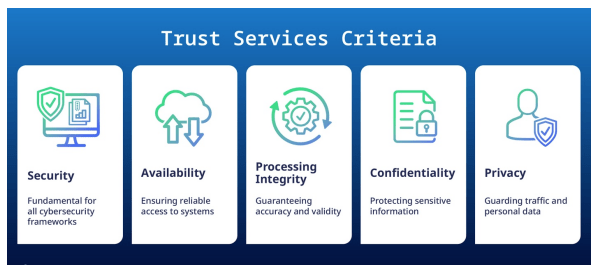
Figure 1: Trust Services Criteria (TSC) Core Principles
The alignment between these standards and internal controls demonstrates a proactive approach to compliance and risk mitigation. It also requires a continual improvement process and recertification program at the organizational level. For the purposes of this paper, we’ll address a few of the necessary comprehensive suite of policies, including Data Protection, Network Security, and Encryption, as they relate to the TSC principles:
Security
Security is foundational to all compliance frameworks. SOC 2 and GovRAMP require strict network isolation, intrusion detection systems (IDS), and firewall configurations to prevent unauthorized access. For example, a comprehensive Network Security Policy is essential. It enforces process controls through segmented network zones, ACLs, and firewalls that isolate production environments from external threats. This is vital for both the organization and the product.
Additionally, secure remote access protocols such as VPN, SSH, and TLS 1.2 or higher are mandated, ensuring encrypted communication across untrusted networks (5). These measures directly address specific security criterion and designated baseline controls for cloud-based services and systems.
Availability
Data availability is critical for ATMS platforms that manage real-time traffic operations. It’s imperative that processes require redundancy, disaster recovery, and infrastructure monitoring to ensure system uptime. A comprehensive Data Protection Policy is essential. It outlines the use of multi-zone replication and encrypted storage volumes to maintain data availability.
The Data Protection Policy must also outline the use of Security Information and Event Management (SIEM) tools to detect system failures and trigger alerts, ensuring rapid response and continuity of service. These practices align with SOC 2’s Availability criterion and GovRAMP’s continuous monitoring requirements.
Processing Integrity
Processing integrity ensures that systems operate accurately and reliably. SOC 2 requires mechanisms to prevent unauthorized data manipulation and to log all system activities. As a result, a Data Protection Policy must mandate role-based access control and comprehensive audit logging for Create, Read, Update, and Delete (CRUD) operations. Logs capture who performed the action, what was done, and the outcome. This is necessary for forensic analysis and compliance reporting. These controls ensure that ATMS data remains accurate and trustworthy.
Confidentiality
Confidentiality ensures that sensitive data is protected from unauthorized disclosure. This is especially important for using real-time crowd-sourced or Floating Car Data (FCD). For example, there are audit benchmarks for encryption of personal data both at rest and in transit. This is where an Encryption Policy that specifies the use of symmetric and/or asymmetric encryption standards for all data, including VPN keys, SSL certificates, and internal communications is essential.
Moreover, combined with a stringent Data Protection Policy, the use of encryption standards reinforces data confidentiality controls by requiring trusted encrypted volumes and secure key management practices. This also includes rotation and hardware-backed storage. These controls ensure that confidential traffic data and user information are protected in accordance with industry and international standards.
Privacy
Privacy is a central tenet of GDPR and is increasingly emphasized in the SOC 2 Type II evaluation. A Data Protection Policy must include data classification protocols, encrypted messaging channels, and regulated data transfer mechanisms. Sensitive data is logically separated at the database level, and access is restricted through token-based authentication. These measures ensure that personal and operational data are handled in accordance with privacy regulations and customer expectations.
Based on the TSC principles, relevant segment highlights can include (Table 1):
Table 1: Trust Principles and Sample Internal Policy Focus Segments
| Trust Principle | Relevant Internal Policy Highlights |
|---|---|
| Security |
|
| Availability |
|
| Processing Integrity |
|
| Confidentiality |
|
| Privacy |
|
Optimized Security Posture: Culture Driven
In the realm of smart mobility and cloud-based ATMS, cybersecurity compliance is more than a technical requirement—it is an operational imperative. It demonstrates an organizational culture of security.
Transportation agencies, cities, and MPOs demand assurances that their cloud-based platform and operational data is protected by rigorous, independently verified controls. SOC 2 Type II, GovRAMP, and GDPR security frameworks provide that assurance, validating accredited third-party auditing of security measures with a focus on sustained ongoing improvement and effectiveness over time.
SOC 2 Type II audits, for example, demonstrate that a cloud-based ATMS provider has implemented controls aligned with the TSC: Security, Availability, Processing Integrity, Confidentiality, and Privacy. These controls must show that they are actively monitored and maintained. This level of transparency fosters trust among public-sector clients, who must ensure that their systems meet both internal governance and external regulatory requirements. GDPR compliance further reinforces this trust by guaranteeing that personal data is handled ethically and securely, with clear accountability and breach notification protocols.
In addition, security frameworks compliance drives a stronger security posture. Preparing for SOC 2 or GovRAMP evaluation audits requires organizations to formalize and document their security practices, implement continuous monitoring, and establish incident response procedures. Receiving a clean ‘no exceptions’ report for an entirety of a cloud-based platform reflects the highest levels of organizational commitment to an optimized security posture. It also ensures that policies directly address network segmentation, intrusion detection, and encrypted remote access. They also identify and enforce encryption and strict key management practices, as well as detail data classification, logging, and monitoring protocols.
These controls also elevate and validate the organization’s ability to detect, respond to, and recover from threats. Building in real-time monitoring tools, centralized logging, and role-based access controls ensure that anomalies are quickly identified and addressed. The result is a resilient cloud-based ATMS platform capable of supporting critical infrastructure in dynamic and even unpredictable ecosystems.
By aligning internal policies with industry standards, cloud-based ATMS platforms and their providers demonstrate both technical competence and strategic foresight. This also helps ensure system scalability and flexibility to support emerging technologies and applications.
Securing the Future of Cloud-Based ATMS
Secure Cloud-Based ATMS Through Cybersecurity Compliance
As cloud-based ATMS become central to Smart City mobility infrastructure, aligning with cybersecurity frameworks like SOC 2 Type II, GovRAMP, and GDPR is imperative. These industry security standards not only validate the robust security controls of CSPs, but they also ensure that the cloud architecture is designed for resilience, scalability, and integrity.
Leveraging and incorporating multi-zone replication, encrypted volumes, and automated monitoring tools help ensure high availability and rapid incident response. These architectural examples reflect a deep commitment to safeguarding sensitive traffic and infrastructure data while supporting operational continuity. To maintain compliance and maximize the benefits of these cybersecurity frameworks, a continually monitored, structured approach is needed for cloud-based ATMS development.
Planning
Conduct a rigorous gap analysis against framework requirements. Identify key areas where internal policies and technical controls need enhancement—particularly around data classification, access management, and encryption protocols.
Conducting Audits
Engage with AICPA-certified third-party auditors to perform SOC 2 Type II assessments. Ensure that audit readiness includes comprehensive documentation, centralized logging, and verified evidence of control effectiveness over time.
Ongoing Compliance
Cybersecurity is a continuous process. Implement automated monitoring, regular vulnerability scans, and incident response drills. Maintain detailed audit trails, update policies to reflect evolving threats, and conduct annual reviews of firewall rules and encryption standards to keep certifications active (6).
By embedding these cybersecurity practices into the foundation of a cloud-based ATMS, CSPs not only meet compliance requirements but also optimize their security posture. This is fundamental in building stakeholder trust and better positioning the system for scalable growth.
In the context of Smart City integration, where data flows across public and private networks, this cybersecurity diligence ensures that digital mobility infrastructure maintains the highest levels of security and interoperability.
Contact Us
We are here to help. Reach out to our team for assistance.
Click the button below to reach a team member for assistance or inquiries.
References
- StateRAMP (dba GovRAMP), a 501(c)6 nonprofit, is a membership organization composed of service providers offering IaaS, PaaS, and/or SaaS solutions, third party assessment organizations, and government officials. Its members lead, manage, and work in various disciplines across the United States and are all committed to making the digital landscape a safer, more secure place. https://govramp.org
- GovRAMP and FedRAMP derive from NIST SP 800-53 requirements; GDPR mandates technical-organizational measures for personal data. CompliancePoint; GDPR Advisor; DataBank
- “The Importance of SOC 2 Type II Compliance for Cloud Service Providers,” Gateway Group, April 1, 2025. Gateway Group
- The GDPR legal requirements and penalties; GDPR Regulation (EU) 2016/679 (General Data Protection Regulation). https://gdpr.eu/tag/gdpr/
- “SOC 2 Requirements: Essential Guidelines for Compliance,” Gowsika, Sprinto, Nov. 7, 2024.
- GovRAMP requires documented continuous monitoring and incident response. StateRAMP Continuous Monitoring and Improvement Guide v1.7, September 2024. StateRAMP Guide PDF