
Cooperative Automated Transportation
Connected and Automated Vehicles: Driving Smart City Mobility Forward
Connected and Automated Vehicles (CAVs) are transforming mobility. As Smart Cities evolve to adapt and accommodate CAVs, the integration of the systems to manage these vehicles is no longer a futuristic concept. It’s a present-day mobility imperative. These vehicles, equipped with advanced sensors and communication technologies, need to interact seamlessly with infrastructure, other vehicles, and traffic management systems. This is Vehicle-to-Everything (V2X).
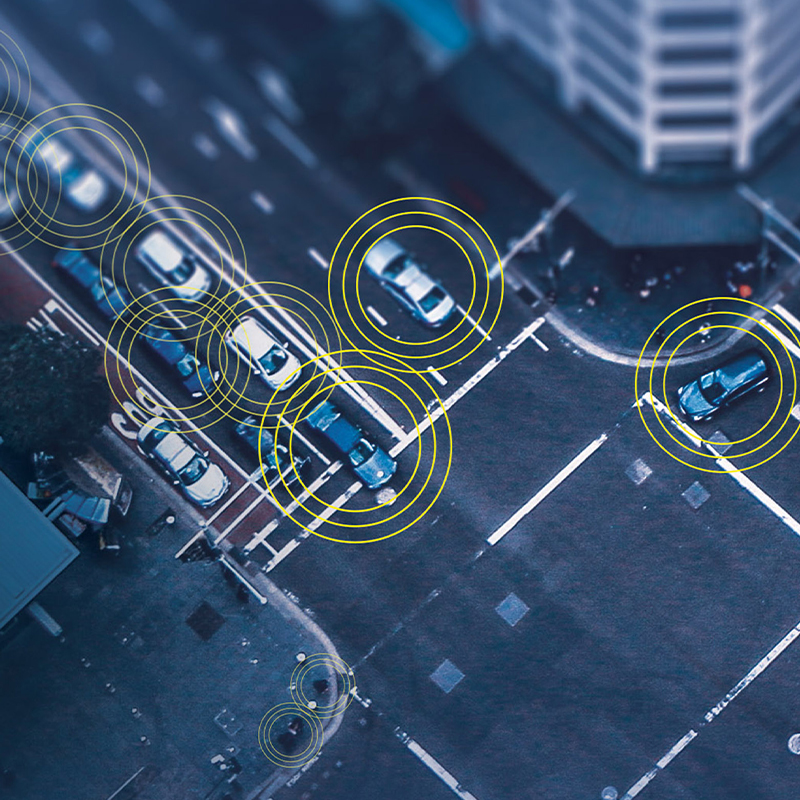
How CAV Technology Works at Intersections
Introduction to CAV-Enabled Traffic Signal Systems
Smart City traffic management must keep up with the CAV and V2X technologies coming online. Traditional traffic control reliant on isolated traffic signals must be replaced by dynamic, data-driven, and networked solutions. Connected and Automated Vehicles and V2X play a pivotal role in this shift, enabling real-time decision-making, as well as predictive and adaptive control strategies that respond to actual roadway conditions.
V2I Backbone
Roadside units (RSUs) allow vehicles to send and receive real-time data, enabling red-light violation warnings, collision avoidance, and active mobility safety for Vision Zero goals.
Dynamic Multimodal Network Management
Today’s smart traffic signals are part of a cooperative network strategy. Through V2I communication, signals and vehicles exchange data to optimize flow and support applications like Transit Signal Priority (TSP) and Emergency Vehicle Preemption (EVP).
Critical Intersection Control
Intersections are key network bottlenecks. CAV-enabled traffic signal systems use V2X telemetry and smart controllers to adjust signal timing dynamically, improving throughput while reducing overall delays.
“Mobile Sensors”
Real-Time Data Exchange
Connected Vehicles as Mobile Sensors
Connected and automated vehicles essentially serve as mobile sensors, continuously transmitting data about speed, location, and heading. This Connected Vehicle Data Exchange provides traffic managers with granular insights and situational awareness into roadway conditions, enabling proactive interventions and more accurate traffic modeling.
Key Standards and Initiatives
The success of V2X communication depends on robust standards. V2X Standards ensure interoperability across different vehicle makes and infrastructure systems. Initiatives like the USDOT’s Connected Vehicle Pilot Program and the IEEE 1609 suite of standards for Direct Short-Range Communications (DSRC) protocols interface are paving the way for widespread adoption of V2X technologies.
Signal Phase and Timing (SPaT), MAP, and Traveler Information Messages (TIM)
Signal Phase & Telemetry
Signal Phase and Timing (SPaT)
SPaT messages are a key component of CAV systems. They inform vehicles of upcoming signal changes, allowing for smoother deceleration and acceleration. This not only improves fuel efficiency but also reduces the risk of collisions and conflicts. SPaT data is also used by traffic management centers to monitor and optimize signal performance.
Intersection Geometry
MAP Messages
MAP messages provide detailed intersection geometry, including lane configurations, permissible movements, and signal locations. This spatial data allows connected and automated vehicles to understand the physical layout of intersections, anticipate lane changes, and execute maneuvers with precision. Accurate MAP data is critical for applications like red-light violation warnings, collision avoidance, and automated driving functions, especially at complex Intersections.
Dynamic Context Alerts
Traveler Information Messages (TIM)
TIM deliver dynamic, context-specific information to vehicles, such as road closures, detours, work zones, or special event traffic patterns. These messages enhance situational awareness for drivers and onboard CAV systems. This enables CAV to adjust routes or driving behavior in real time. TIMs also support emergency response coordination and improve traffic flow during EVP events.
Data Exchange with Traffic Management Centers
01. Operations
Real-Time Data Flow to TMCs
Traffic Management Centers (TMCs) are the nerve centers of Smart City traffic management. They rely on real-time data from connected vehicles and infrastructure to make informed decisions or trigger automated operations. This data flow supports applications such as dynamic routing, congestion mitigation, safety counter measures, and incident response.
02. Infrastructure
Cloud and Edge Computing in Signal Control
Modern ATMS systems leverage both cloud and edge computing. Cloud platforms provide scalable data storage and analytics, while edge devices enable low-latency processing and computation at the intersection. This hybrid approach ensures fast, reliable communication between CAVs and infrastructure.
03. Protection
Cybersecurity and Reliability
With increased connectivity comes the need for robust cybersecurity. Protecting V2X communication channels from cyber threats is essential to maintaining public trust and system integrity. Cybersecurity best practices, including encryption, authentication protocols, and continuous monitoring are key components of a secure connected mobility ecosystem.
Benefits of Connected Signal Systems
01. Safety & Protection
Enhancing Safety for All Roadway Users
Connected traffic signal systems can significantly enhance safety. Red-light warning systems alert drivers of potential violations, while collision avoidance and dilemma zone protection technologies mitigate collision risks. Pedestrian protection can also yield safety benefits through V2X-enabled crosswalk alerts and adaptive signal timing.
02. Flow & Performance
Optimizing Traffic Flow and Efficiency
Smart traffic signals and AI-powered dynamic traffic management systems can help optimize traffic flow by adjusting signal timing based on real-time conditions or forecasts. This reduces travel times, prevents congestion, and supports Vision Zero initiatives. Traffic Signal Priority ensures that transit vehicles move smoothly through intersections, enhancing public transportation reliability.
03. Sustainability
Environmental and Community Impacts
Reduced idle times and smoother traffic flow lead to lower greenhouse emissions and other vehicle-born pollution, contributing to cleaner air and healthier communities. Connected vehicle integration also supports equity by improving access to mobility services and reducing travel disparities across communities.
Preparing for Connected and Automated Vehicles
01. Assessment
Assessing Infrastructure Readiness
Before deploying connected and automated vehicle technologies, municipalities must assess their infrastructure readiness. This includes evaluating existing ATMS, traffic signal controllers, sensors, communication networks, and data management capabilities. A thorough Intelligent Transportation Systems (ITS) infrastructure assessment helps identify connected vehicle integration gaps and prioritize technology upgrades and deployments.
02. Strategy
Phased Deployment Strategies
Implementing connected and automated vehicle systems can be phased-in or incremental. Phased deployment strategies allow cities to start with pilot intersections and then quickly expand when appropriate. This approach minimizes disruption and provides valuable process and procedural insights for scaling up additional deployments.
03. Collaboration
Partnering and Funding Opportunities
Public-private partnerships are essential for successful connected and automated vehicle integration. Federal and state grants, such as those from the USDOT and FHWA, provide funding opportunities for pilot CAV and V2X programs and infrastructure upgrades. Collaborating with technology providers ensures access to new and emerging solutions, as well as ongoing support.
Econolite’s CAV Solutions and Leadership
Core Solution
CAV-Ready Product Suite
Econolite’s CAV-ready product suite includes Cobalt® ATC signal controllers powered by EOS with Connected Vehicle Co-processor and the industry leading Centracs® ATMS platform and modules. Together, these systems create a solution designed to help facilitate seamless CAV and V2X Technology integration. These products support SPaT, MAP, and TIM messaging, traffic signal preemption, and real-time data exchange and analytics.
Econolite’s Role in Connected Vehicle Pilots
Econolite has been at the forefront of connected vehicle management innovation. As a key participant in national and regional programs, as well as a supporter and advocate for DSRC standards, Econolite has demonstrated the real-world benefits of CAV technologies. These pilot programs and large-scale deployments showcase how Smart City traffic management can transform the future of mobility through data-driven solutions.
Commitment to Innovation and Interoperability
Innovation is always at the heart of Econolite’s mission. Econolite remains steadfast and committed to developing interoperable ITS solutions that align with V2X Standards and support Connected Vehicle Integration across diverse multimodal transportation ecosystems. With a focus on systems scalability and robustness, Econolite empowers cities to leverage Dynamic Multimodal Network Management to build smarter, safer transportation networks.
0
+ cabinets
0
+ Traffic Controllers
0
+ Systems Deployed
0
+ Sensors Installed