Traffic signal maintenance plays a critical role in keeping large transportation networks operating safely and efficiently. The Florida Department of Transportation (FDOT) District 1, headquartered in Bartow, Florida, manages transportation infrastructure across twelve counties in Southwest Florida. This rapidly growing region supports nearly five million residents and millions of daily trips.
Because the district experiences large swings in commuter and tourist traffic, its infrastructure must remain reliable at all times. In addition, severe weather and heavy traffic volumes can create equipment damage and operational challenges. For these reasons, FDOT District 1 required an experienced partner to support maintenance, upgrades, and emergency response across its traffic signal network, similar to other large-scale traffic signal maintenance programs supporting major metropolitan areas.
Traffic Signal Maintenance Across FDOT District 1
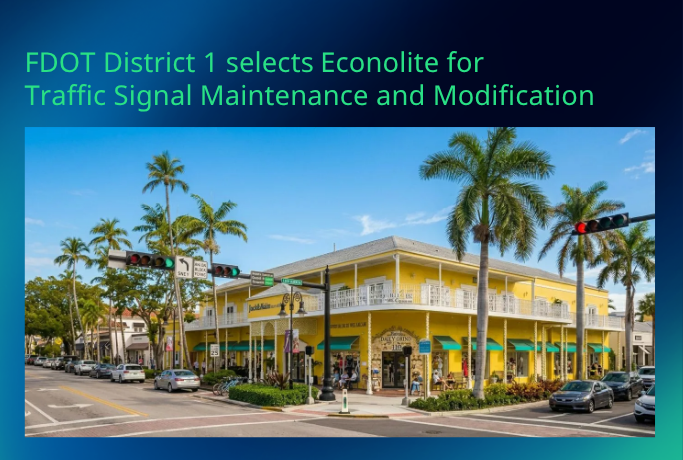
In 2026, Econolite Systems, Inc. was awarded the contract to deliver traffic signal maintenance and modification services throughout the district. Under this contract, Econolite provides the labor, equipment, and materials required to maintain and repair traffic signal infrastructure across the twelve counties.
Econolite’s team of IMSA-certified technicians performs installation, inspection, and modification work to ensure signals operate correctly and remain compliant with operational standards. As a result, agencies can maintain consistent traffic operations and reduce downtime across the network while supporting modern advanced traffic management systems.
Signal Installation and System Modifications
The program also includes upgrades and improvements to existing signal systems. Technicians repair damaged equipment, modify system components, and install new signal infrastructure when required. In some cases, new signal structures or devices are installed to bring intersections back into full operation.
These improvements support long-term system reliability and help maintain safe intersections for drivers, cyclists, and pedestrians. Similar technology deployments can be seen in projects involving video detection and citywide Opticom installations designed to enhance intersection safety and traffic responsiveness.
Transportation System Upgrades and ITS Improvements
In addition to routine traffic signal maintenance, the project supports broader transportation system upgrades across FDOT District 1. These upgrades help modernize infrastructure and prepare the region for emerging traffic management technologies.
For example, system improvements support future signal optimization strategies such as automated Signal Performance Measures (SPM). As a result, transportation agencies can better monitor traffic operations and identify opportunities for performance improvements using data-driven tools such as crowdsourced traffic data analytics.
These upgrades also support future traffic management software deployments and connected vehicle initiatives designed to improve mobility and safety.
Supporting Connected and Smart Mobility Systems
Modern transportation systems require real-time monitoring, reliable communications, and scalable infrastructure. Therefore, these upgrades support the data and control systems needed for connected vehicle technologies and Smart City initiatives.
By strengthening its ITS infrastructure, FDOT District 1 can expand traffic monitoring capabilities and improve operational visibility across its transportation network. These types of coordinated operations are also demonstrated through programs such as Integrated Corridor Management (ICM) deployments that connect multiple corridors and traffic systems.
Emergency Response and Traffic Signal Operations
A key component of this program is emergency readiness. Because severe weather and traffic incidents can damage roadside equipment, Econolite will maintain a dedicated rapid-response team to support districtwide emergencies.
The team will provide 24/7 support for equipment failures, traffic signal knockdowns, and weather-related outages. When incidents occur, technicians quickly assess the situation, repair damaged infrastructure, and restore signal operations while supporting the region’s broader traffic engineering and operational services.
Rapid Response for Critical Traffic Infrastructure
Fast response times are essential for maintaining safe roadways. Therefore, the emergency response program ensures that traffic signals and related systems can be repaired or replaced quickly when disruptions occur.
These services strengthen overall traffic signal maintenance operations and ensure reliable transportation infrastructure throughout the district. Agencies looking to stay informed on evolving traffic technologies and system modernization strategies can also review industry updates such as the PTV Mobility industry update.